**Brunswick Community Champions Win National Award for Safe Water Initiative**
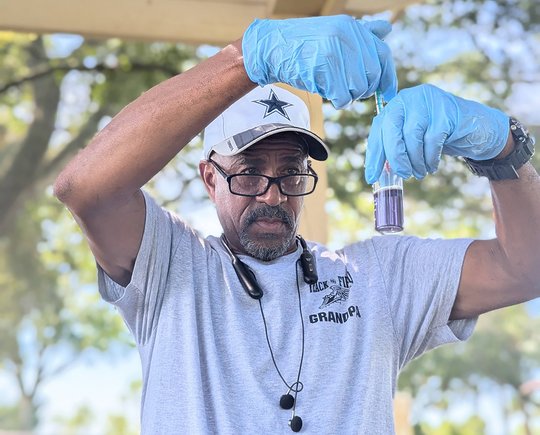
When residents of Brunswick, Georgia, raised concerns about their water quality, a surprising alliance emerged at the intersection of science and faith. Supported by training and tools from Georgia Southern University’s Institute for Water and Health, 12 local community leaders—including pastors, commissioners, and residents—became citizen scientists, testing and protecting the waterways that sustain their neighborhoods.
Their efforts didn’t stop there. These champions invited their congregations and the broader community to follow their lead in monitoring and safeguarding Brunswick’s water. This innovative, community-led initiative, “Safe Water Together for Brunswick,” has now earned the P3 Social Impact Award—one of the nation’s highest honors for public-private partnerships. Sponsored by the U.S. Department of State’s Office of Global Partnerships, Concordia, and the University of Virginia Darden School, the award recognizes collaborations that improve lives and communities worldwide. Winners were announced in October in New York City.
> “Safe Water Together for Brunswick demonstrates the power of communities participating in solutions,” said Institute for Water and Health Director Asli Aslan, Ph.D. “By training local residents to monitor and protect their waterways, we are building trust in data, supporting watershed management programs, and creating a model that can be adapted in other cities facing water challenges. This award recognizes what can happen when science, education, and community leadership come together.”
**Responding to Critical Water Concerns**
The project began when Glynn County Commissioner Allen Booker approached Dr. Aslan about residents experiencing water quality problems. Brunswick, located on Georgia’s coast, is home to four EPA-designated Superfund sites—federally recognized areas contaminated with hazardous substances requiring long-term cleanup to protect public health and the environment.
With limited resources, residents often had more questions than answers. The COVID-19 pandemic heightened risks. “People were fishing and crabbing in surface waters marked with warnings,” Aslan said. “For many, it became their main protein source. That’s when we realized that this had to be a community-led solution.”
Georgia Southern spearheaded Safe Water Together for Brunswick in September 2023, in collaboration with Rebuilding Together Glynn County and funding from Georgia Tech’s Partnership for Innovation (PIN) Community Research Grants Program. Over the course of a year, Institute for Water and Health faculty and students in public health and education worked closely with community leaders to build a citizen science-based water quality monitoring program.
> “This PIN grant opportunity builds the capacity of our community and empowers neighborhoods so that our families can improve their quality of life,” Booker said.
**A Collaborative Community Effort**
Local pastors completed the state’s Adopt-A-Stream program training, earning certification as official volunteers for water quality monitoring. Rebuilding Together Glynn County Community Development Corporation became the center of action, housing a new community-owned water testing lab built and equipped through the grant.
“We use the principles of Community-Based Participatory Research (CBPR), a fundamental public health intervention method,” Aslan explained. “Collaboration, community ownership, mutual learning, and empowerment are key. This project gives downtown Brunswick residents the tools and training to research environmental conditions and broader impacts by building capacity and scientific literacy.”
Dr. Aslan stressed the importance of trust in research: “Public health research often struggles with mistrust of science and academia. By involving community members as partners from planning through dissemination, CBPR fosters trust, transparency, and mutual respect. It’s more powerful when trusted local members, like pastors, lead these efforts. There’s more buy-in and greater impact.”
**Training the Next Generation**
Six students from Georgia Southern and the College of Coastal Georgia participated in the project, including two funded summer interns. They gained hands-on experience in public health communication, environmental analysis, and community engagement.
> “Multidisciplinary students from biology, public health, and environmental sciences were engaged with the community researchers from day one,” Aslan said. “They practiced field sample collection and laboratory analysis alongside community members, developed soft skills, built a story map, conducted interviews and produced videos. This positions them well for their future careers as environmental health scientists.”
Alice McCloud, a master’s student in environmental public health, shared her perspective:
> “This project was especially meaningful because it took place in my hometown. Engaging directly with my community made the work feel personal and impactful. I enjoyed training our citizen scientists and learning alongside them. This experience taught me that success isn’t just about what you do, but who you do it with.”
Taryn Black, an undergraduate biochemistry student, highlighted the importance of community collaboration:
> “This project allowed me to develop skills in both public health and laboratory work. Genuine community engagement inspired me throughout every stage. Collaborating with local pastors to empower the community to understand water quality was very powerful.”
**Lasting Impact and Growing Interest**
Since its launch, the project has continued to make a lasting impact. Residents regularly collect and analyze water samples, sharing data directly with Georgia’s Department of Natural Resources to strengthen regional monitoring efforts.
> “We are still continuing close collaboration with the community,” Aslan said. “When a fish kill occurs, residents now collect samples and conduct water quality tests in the lab we helped establish. When advanced analyses are needed, we provide high-quality data. It is a partnership for years to come.”
Behavioral change is already visible in Brunswick:
> “When people see their pastor or commissioner collecting samples or hear results firsthand, they change how they fish and become more mindful of posted warnings,” Aslan noted. “That’s science translated into trust, and trust translated into action.”
Interest in the Brunswick model is spreading. Other universities and local governments have reached out to learn how to replicate the project’s community-first approach.
> “Access to safe water is a global challenge,” Aslan said. “It unlocks economic development, improves health, and gives people a shot at a quality life. What we are doing in Brunswick shows how science, education, and community trust can come together to protect our waterways and the people who depend on this beautiful resource we are privileged to have in Georgia. At the Institute for Water and Health, our flagship program, Safe Water Together, will continue to support communities through impactful research and educational initiatives.”
https://www.statesboroherald.com/local/gs-project-aims-to-protect-waterways-in-south-georgia/