general

Zero Knowledge Proof (ZKP) Redefines Crypto Whitelists with Curatorship and Verification

The post Zero Knowledge Proof transforms the presale crypto whitelist by rewarding judgment over hype. Discover how this zero knowledge proof crypto project prioritizes verification and cognitive clarity for early crypto access. The cryptocurrency space has long rewarded noise over nuance. Followers, engagement, and speculation often decide who gets early access or credibility. Zero Knowledge Proof (ZKP) rejects this pattern, replacing social clout with informational judgment. Through its presale crypto whitelist, Zero Knowledge Proof (ZKP) invites participants not for their volume but for their clarity. It’s a system that recognizes critical thought and the ability to verify truth over trending narratives. The whitelist is not a popularity contest; it’s an early filter for cognitive precision in a space flooded by hype. A New Standard for Early Crypto Access The typical path into a best presale crypto 2025 project often runs through marketing influence and speculative energy. Zero Knowledge Proof (ZKP) changes this by tying early access to verification and curatorial ability. Its whitelist serves as a structural gateway, one designed to attract those who contribute to knowledge, not noise. At its foundation, the zero knowledge proof blockchain model is built on the principle of verifiable truth without exposure. This same philosophy extends to its whitelist mechanics, where the goal is to identify participants who can assess information accurately. By rewarding intellectual judgment, Zero Knowledge Proof (ZKP) promotes a cleaner form of community building, one driven by insight, not illusion. The Whitelist That Measures Mindset, Not Metrics Social media has conditioned crypto culture to measure credibility by follower counts and engagement spikes. Zero Knowledge Proof (ZKP) disrupts that by evaluating value through informational contribution. Its presale crypto whitelist asks a simple question: Can you tell what’s true? Those who qualify are not rewarded for promotion or loud advocacy but for.

businesseconomyfinancetechnology

Cardano (ADA) Price: Grayscale ETF Listing Opens Door for Institutional Investors

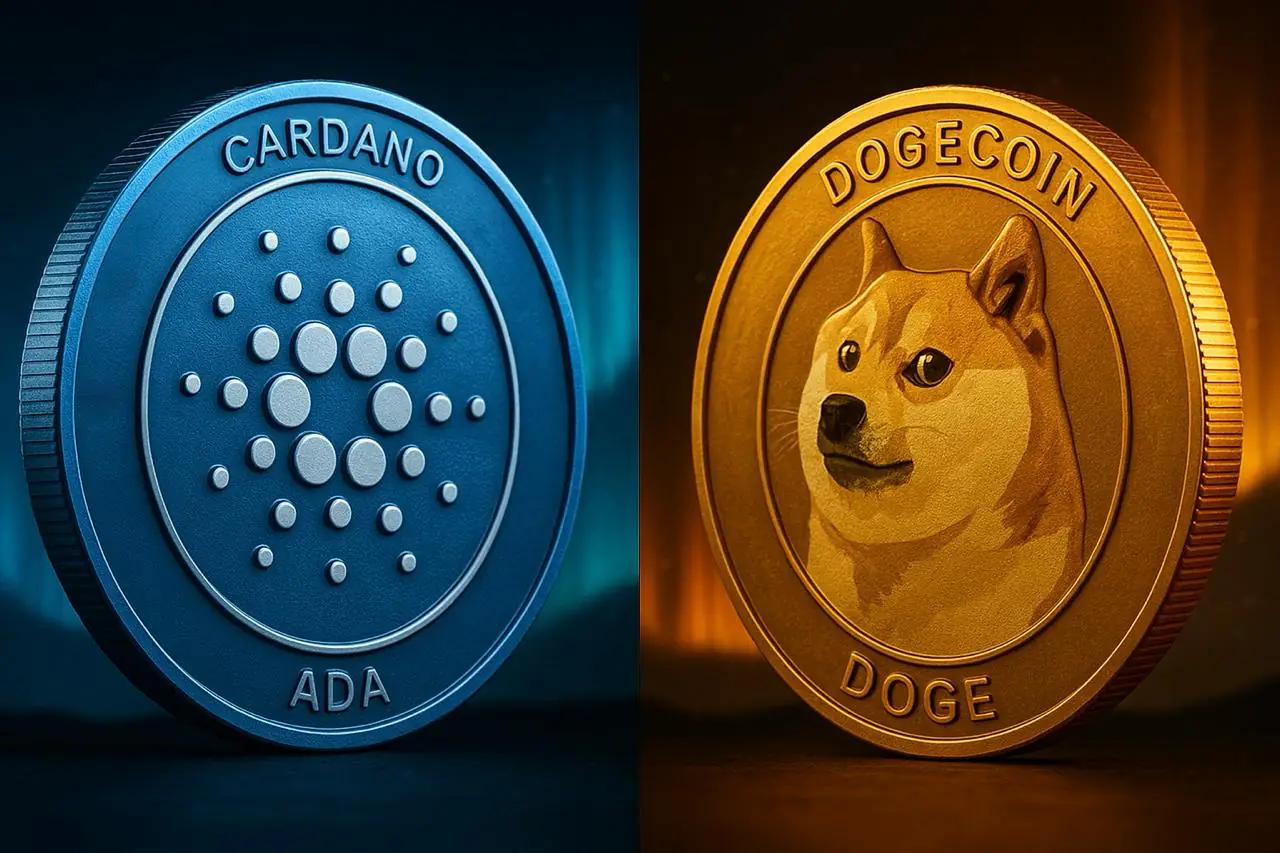
TLDR Cardano (ADA) was added to Grayscale’s Digital Large Cap Fund ETF, which launched on the New York Stock Exchange, marking increased institutional access to the cryptocurrency. ADA’s price increased 1. 75% in 24 hours and 5% over the past week, currently trading at $0. 6615 with a market cap of $23. 73 billion. Technical analysis shows ADA [.] The post Cardano (ADA) Price: Grayscale ETF Listing Opens Door for Institutional Investors appeared first on CoinCentral.

businessfinanceinternationallegaltechnology

CZ Walks Free: Trump Pardon Sparks Polymarket Betting Frenzy on Binance Return

TLDR US President Donald Trump pardoned Binance founder Changpeng ‘CZ’ Zhao on Thursday, October 23, 2025, after he pleaded guilty to money laundering violations in 2023 Polymarket betting odds for CZ returning to Binance by December 31 jumped to 82% following the pardon news but later stabilized around 36% Zhao was sentenced to four months [.] The post CZ Walks Free: Trump Pardon Sparks Polymarket Betting Frenzy on Binance Return appeared first on CoinCentral.

general

Ethereum (ETH) Price: Elliott Wave Pattern Points to Potential $8,000 Target

TLDR Elliott Wave analysis suggests Ethereum has completed corrective waves and may be starting impulsive wave five, which could push prices to $7,000-$8,000. BitMine Immersion Technologies accumulated $1. 5 billion worth of Ether in three purchases since the recent market crash, bringing its holdings to 3. 03 million ETH. Tom Lee maintains his $10, 000-$12, 000 price target for [.] The post Ethereum (ETH) Price: Elliott Wave Pattern Points to Potential $8,000 Target appeared first on CoinCentral.

general

Japan’s FSA weighs allowing banks to hold Bitcoin, other cryptos: Report

Japan’s Financial Services Agency is weighing reforms that could let banks hold cryptocurrencies like Bitcoin and operate licensed crypto exchanges. Japan’s Financial Services Agency (FSA) is reportedly preparing to review regulations that could allow banks to acquire and hold cryptocurrencies such as Bitcoin for investment purposes. The move would mark a major policy shift, as current supervisory guidelines, revised in 2020, effectively ban banks from holding crypto due to volatility risks, according to a Sunday report Per the report, the FSA plans to discuss the reform at an upcoming meeting of the Financial Services Council, an advisory body to the Prime Minister. The initiative aims to align crypto asset management with traditional financial products like stocks and government bonds. Read more.

Sitemap Index